Italian Travel Vocabulary

Essential Italian Phrases For Difficult Situations

Traveling in Italy is an amazing experience, but sometimes unexpected problems happen. You might lose your luggage, miss a train, lose your passport, or need help finding transportation.

In this lesson, you’ll learn useful Italian phrases for handling common travel problems and difficult situations with more confidence.

Some of the practical phrases included in this lesson are:

If You Lose Something

  • Non trovo il mio bagaglio. Può controllare nel sistema?
    (I can’t find my luggage. Can you check the system?)

  • Ho perso il mio passaporto.
    (I lost my passport.)

  • Ho lasciato il mio portafoglio al ristorante. Potete controllare per favore?
    (I left my wallet at the restaurant. Can you check, please?)

Transportation Problems

  • Mi scusi, ho perso il treno. Qual è il prossimo?
    (Excuse me, I missed the train. When is the next one?)

  • Il mio volo è stato cancellato. Cosa posso fare?
    (My flight was canceled. What can I do?)

  • Quanto costa un taxi per andare in centro?
    (How much is a taxi to the city center?)

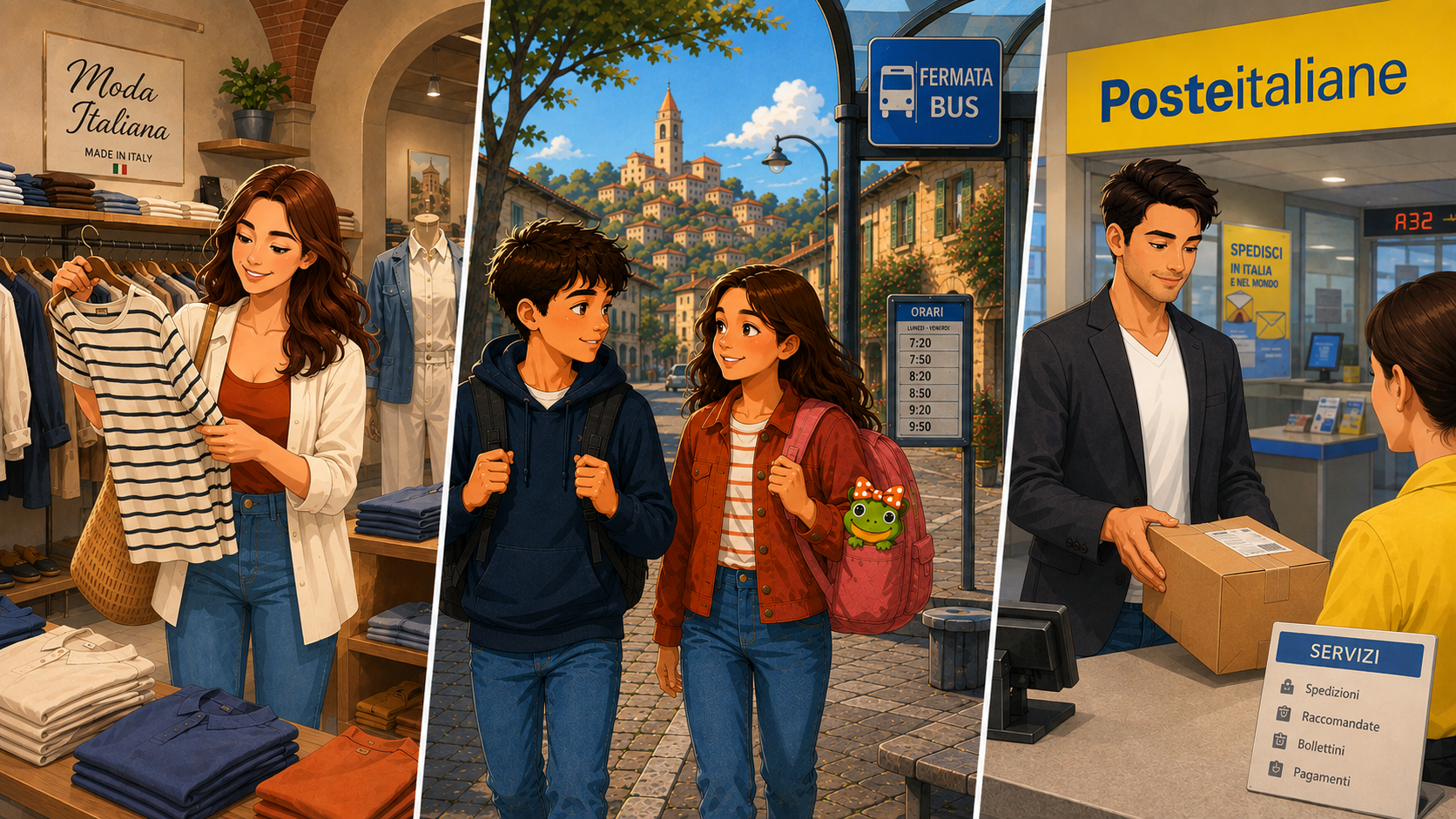
  • Dove si trova la fermata dell’autobus?
    (Where is the bus stop?)

These are real-world Italian phrases that can help you stay calm and communicate more effectively during stressful situations while traveling in Italy.

Whether you are visiting Italy for vacation, studying Italian, or preparing for everyday travel conversations, these expressions are extremely useful to know.

How To Describe Places In Italian

Italy is full of beautiful cities, charming villages, historic buildings, beaches, mountains, and unforgettable landscapes. In this lesson, you’ll learn useful Italian vocabulary and adjectives for describing places naturally and confidently.

You’ll also learn important grammar rules for using adjectives correctly in Italian conversation.

Some of the vocabulary and examples included in this lesson are:

Basic Rules

Italian adjectives usually agree with the noun in gender and number.

Examples:

  • Una città bella
    (A beautiful city)

  • Paesaggi belli
    (Beautiful landscapes)

Adjectives usually come after the noun in Italian.

Examples:

  • Una spiaggia bella
    (A beautiful beach)

  • Un edificio moderno
    (A modern building)

Useful Adjectives For Describing Places

  • Bello/a — Beautiful

  • Antico/a — Ancient

  • Moderno/a — Modern

  • Tranquillo/a — Peaceful

  • Vivace — Lively

  • Incantevole — Enchanting

  • Pittoresco — Picturesque

  • Fascinoso — Fascinating

  • Maestoso — Majestic

  • Caotico — Chaotic

  • Rilassante — Relaxing

  • Affollato — Crowded

  • Luminoso — Bright

  • Rustico — Rustic

  • Piacevole — Enjoyable

This lesson is perfect for beginners, travelers, and anyone who wants to speak more naturally when talking about Italy, travel, cities, beaches, restaurants, neighborhoods, and everyday experiences.

Speaking About Holidays In Italian

Planning a trip to Italy? In this beginner-friendly Italian lesson, you’ll learn practical travel vocabulary and useful holiday-related expressions that can help you feel more confident while traveling.

This lesson introduces common Italian words connected to vacations, transportation, sightseeing, restaurants, museums, beaches, maps, and everyday travel situations.

Essential Italian Travel Vocabulary

  • La vacanza — Holiday / Vacation

  • Viaggiare — To travel

  • Il viaggio — Trip

  • La destinazione — Destination

  • La gita — Excursion

  • La spiaggia — Beach

  • Il mare — Sea

  • La montagna — Mountain

  • La città — City

  • Il paese — Country / Town

Useful Travel Words in Italian

  • Il bagaglio — Luggage

  • Il bagaglio a mano — Hand luggage

  • La valigia — Suitcase

  • Lo zaino — Backpack

  • La guida turistica — Tour guide

  • La mappa — Map

  • Il museo — Museum

  • Il monumento — Monument

  • Il parco — Park

  • La piazza — Square

  • Il ristorante — Restaurant

  • Il caffè — Café

  • Il souvenir — Souvenir

  • La cartolina — Postcard

Whether you’re preparing for a vacation in Italy or simply expanding your beginner Italian vocabulary, these practical words and phrases are extremely useful for real-life conversations and travel situations.