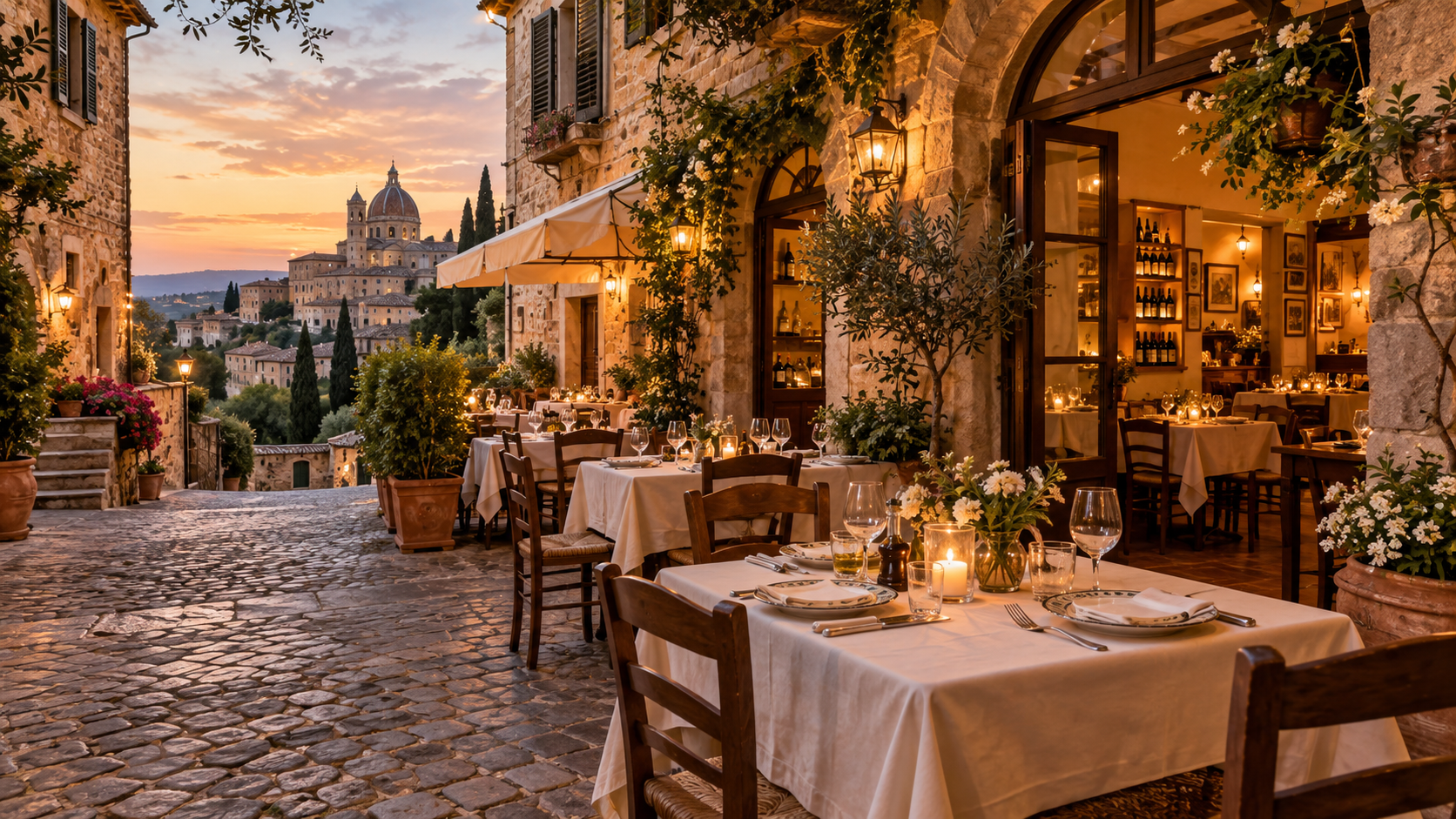
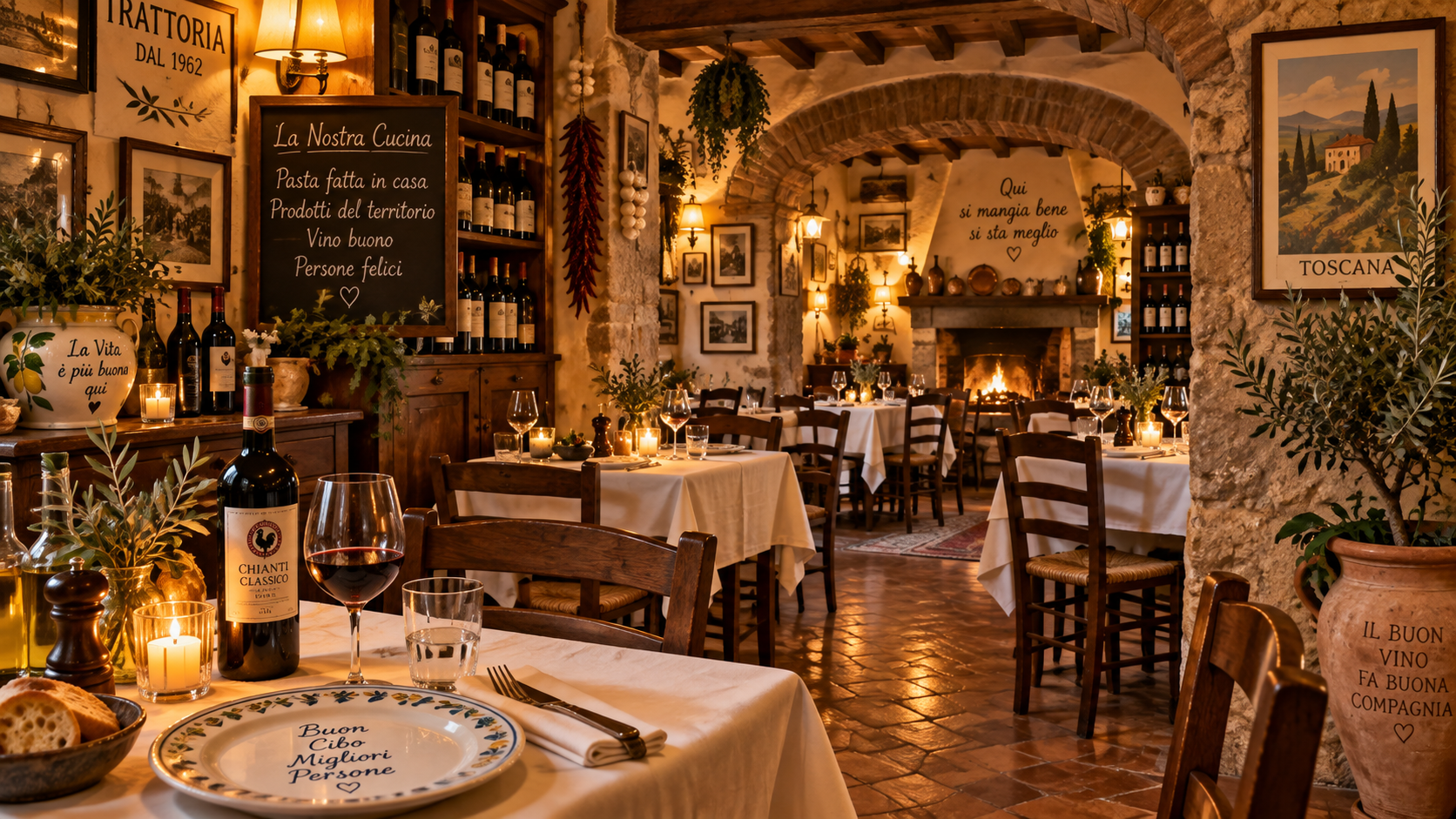
Wondering what to expect at an authentic Italian restaurant? Follow the experience from arriving and ordering drinks to understanding the menu, choosing courses, dessert, coffee and paying the bill.

ITALIAN IN REAL LIFE
Traveling in Italy is an amazing experience, but sometimes unexpected problems happen. You might lose your luggage, miss a train, lose your passport, or need help finding transportation.
In this lesson, you’ll learn useful Italian phrases for handling common travel problems and difficult situations with more confidence.
Some of the practical phrases included in this lesson are:
Non trovo il mio bagaglio. Può controllare nel sistema?
(I can’t find my luggage. Can you check the system?)
Ho perso il mio passaporto.
(I lost my passport.)
Ho lasciato il mio portafoglio al ristorante. Potete controllare per favore?
(I left my wallet at the restaurant. Can you check, please?)
Mi scusi, ho perso il treno. Qual è il prossimo?
(Excuse me, I missed the train. When is the next one?)
Il mio volo è stato cancellato. Cosa posso fare?
(My flight was canceled. What can I do?)
Quanto costa un taxi per andare in centro?
(How much is a taxi to the city center?)
Dove si trova la fermata dell’autobus?
(Where is the bus stop?)
These are real-world Italian phrases that can help you stay calm and communicate more effectively during stressful situations while traveling in Italy.
Whether you are visiting Italy for vacation, studying Italian, or preparing for everyday travel conversations, these expressions are extremely useful to know.
Small talk is an important part of Italian culture. Whether you are sitting in a café, meeting new people, traveling through Italy, or having a casual conversation, knowing a few natural Italian phrases can help you feel more confident and connected.
In this lesson, you’ll learn useful Italian expressions for asking questions, starting conversations, and giving compliments in everyday situations.
Some of the phrases included in this lesson are:
Di dove sei?
(Where are you from?)
Ti piace vivere qui?
(Do you like living here?)
Qual è il tuo hobby preferito?
(What’s your favorite hobby?)
Cosa fai di bello?
(What do you do for a living?)
Da quanto tempo vivi in questa città?
(How long have you been living in this city?)
Che bel vestito!
(What a beautiful dress!)
Mi piace molto il tuo sorriso.
(I really like your smile.)
Lei è molto gentile!
(You are very kind!)
Stai benissimo con questo vestito.
(You look amazing in this dress.)
These are natural Italian phrases that can help you sound more relaxed, friendly, and conversational while speaking with native Italians.
Perfect for beginners, travelers, and anyone who wants to improve their real-world Italian conversation skills.
Italy is full of beautiful cities, charming villages, historic buildings, beaches, mountains, and unforgettable landscapes. In this lesson, you’ll learn useful Italian vocabulary and adjectives for describing places naturally and confidently.
You’ll also learn important grammar rules for using adjectives correctly in Italian conversation.
Some of the vocabulary and examples included in this lesson are:
Italian adjectives usually agree with the noun in gender and number.
Examples:
Una città bella
(A beautiful city)
Paesaggi belli
(Beautiful landscapes)
Adjectives usually come after the noun in Italian.
Examples:
Una spiaggia bella
(A beautiful beach)
Un edificio moderno
(A modern building)
Bello/a — Beautiful
Antico/a — Ancient
Moderno/a — Modern
Tranquillo/a — Peaceful
Vivace — Lively
Incantevole — Enchanting
Pittoresco — Picturesque
Fascinoso — Fascinating
Maestoso — Majestic
Caotico — Chaotic
Rilassante — Relaxing
Affollato — Crowded
Luminoso — Bright
Rustico — Rustic
Piacevole — Enjoyable
This lesson is perfect for beginners, travelers, and anyone who wants to speak more naturally when talking about Italy, travel, cities, beaches, restaurants, neighborhoods, and everyday experiences.
Politeness is an important part of everyday communication in Italy. Simple expressions like “thank you,” “you’re welcome,” and polite responses can make conversations feel warmer, more natural, and more respectful.
In this lesson, you’ll learn common polite Italian phrases that are useful in restaurants, shops, hotels, travel situations, and everyday conversations.
Some of the phrases included in this lesson are:
Grazie
(Thank you)
Prego
(You’re welcome / Please / Go ahead)
Grazie per l’aiuto!
(Thank you for the help!)
Grazie per il cibo.
(Thank you for the food.)
Grazie per il complimento!
(Thank you for the compliment!)
Grazie per il regalo!
(Thank you for the gift!)
Grazie per avermi aiutato.
(Thank you for helping me.)
Prego, è stato un piacere.
(You’re welcome, it was a pleasure.)
Grazie per avermi aspettato.
(Thank you for waiting for me.)
Prego, non c’è problema.
(You’re welcome, no problem.)
Prego, vai avanti.
(Please, go ahead.)
Prego, si sieda.
(Please, have a seat.)
These are natural Italian phrases that native speakers use every day and are essential for sounding more polite and confident while speaking Italian.
Perfect for beginners, travelers, and anyone who wants to improve their real-world Italian conversation skills.
THE ART OF SMALL TALK: ESSENTIAL ITALIAN PHRASES FOR SOCIALIZING
ROMANTIC ITALIAN LOVE PHRASES: HOW TO SPEAK FROM THE HEART IN ITALIAN
Planning a trip to Italy? In this beginner-friendly Italian lesson, you’ll learn practical travel vocabulary and useful holiday-related expressions that can help you feel more confident while traveling.
This lesson introduces common Italian words connected to vacations, transportation, sightseeing, restaurants, museums, beaches, maps, and everyday travel situations.
La vacanza — Holiday / Vacation
Viaggiare — To travel
Il viaggio — Trip
La destinazione — Destination
La gita — Excursion
La spiaggia — Beach
Il mare — Sea
La montagna — Mountain
La città — City
Il paese — Country / Town
Il bagaglio — Luggage
Il bagaglio a mano — Hand luggage
La valigia — Suitcase
Lo zaino — Backpack
La guida turistica — Tour guide
La mappa — Map
Il museo — Museum
Il monumento — Monument
Il parco — Park
La piazza — Square
Il ristorante — Restaurant
Il caffè — Café
Il souvenir — Souvenir
La cartolina — Postcard
Whether you’re preparing for a vacation in Italy or simply expanding your beginner Italian vocabulary, these practical words and phrases are extremely useful for real-life conversations and travel situations.
Traveling becomes much easier when you know the most common airport vocabulary in Italian. In this practical beginner-friendly Italian lesson, you’ll learn essential Italian airport words and travel phrases that can help you navigate airports, flights, check-in counters, security checks, and boarding procedures with confidence.
These Italian travel expressions are especially useful for tourists, international travelers, and anyone visiting Italy.
L’aeroporto — Airport
L’arrivo — Arrival
La partenza — Departure
Il volo — Flight
Il biglietto — Ticket
Il passaporto — Passport
Il controllo di sicurezza — Security check
Il gate — Gate
Il bagaglio — Luggage
Il bagaglio a mano — Hand luggage
La sala d’attesa — Waiting area
L’imbarco — Boarding
Il check-in — Check-in
Il ritiro bagagli — Baggage claim
La dogana — Customs
Il terminal — Terminal
Il volo internazionale — International flight
Il volo nazionale — Domestic flight
Il volo diretto — Direct flight
Lo scalo — Layover / Stopover
Il banco informazioni — Information desk
La carta d’imbarco — Boarding pass
Il decollo — Takeoff
L’atterraggio — Landing
L’orario dei voli — Flight schedule
Knowing these basic Italian airport phrases can help you:
travel more confidently in Italy
understand airport announcements
ask for directions
handle check-in and boarding
communicate during delays or travel issues
improve practical Italian speaking skills
This lesson is ideal for beginner Italian learners and travelers preparing for trips to Italy.
Need to visit a doctor in Italy? In this practical beginner-friendly Italian lesson, you’ll learn essential Italian phrases for making a medical appointment, speaking with clinic staff, and providing personal information during a doctor’s visit.
These useful Italian medical expressions are ideal for travelers, expats, students, and anyone who wants to feel more confident communicating in healthcare situations in Italy.
Buongiorno, vorrei prendere un appuntamento con il dottore, per favore.
— Good morning, I would like to make an appointment with the doctor, please.
Ho bisogno di un appuntamento urgente.
— I need an urgent appointment.
Vorrei fissare un appuntamento.
— I would like to schedule an appointment.
Quando è possibile avere un appuntamento?
— When is it possible to have an appointment?
Mi chiamo [your name].
— My name is [your name].
Sono di [your country].
— I am from [your country].
Sono nato/a il [date of birth].
— I was born on [date of birth].
Ho bisogno di una visita per [specific reason].
— I need a visit for [specific reason].
Il mio numero di telefono è [your phone number].
— My phone number is [your phone number].
Knowing basic Italian medical phrases can help you:
make doctor appointments in Italy
explain your needs more clearly
communicate during emergencies
reduce stress while traveling
improve real-world Italian conversation skills
This lesson is especially helpful for beginner Italian learners and travelers preparing for real-life situations in Italy.
Want to learn how to count in Italian? In this beginner-friendly Italian lesson, you’ll master essential Italian numbers, counting patterns, and pronunciation used in everyday conversations, travel situations, shopping, prices, dates, and more.
This lesson is perfect for beginner Italian learners, travelers to Italy, and anyone who wants to build a strong foundation in Italian vocabulary and communication.
0 — Zero
1 — Uno
2 — Due
3 — Tre
4 — Quattro
5 — Cinque
6 — Sei
7 — Sette
8 — Otto
9 — Nove
10 — Dieci
11 — Undici
12 — Dodici
13 — Tredici
14 — Quattordici
15 — Quindici
16 — Sedici
17 — Diciassette
18 — Diciotto
19 — Diciannove
20 — Venti
You’ll also learn useful numbers such as:
21 — Ventuno
22 — Ventidue
30 — Trenta
46 — Quarantasei
59 — Cinquantanove
68 — Sessantotto
85 — Ottantacinque
Learning Italian numbers helps you:
order food and drinks
understand prices
tell time
ask for quantities
understand dates and addresses
communicate more confidently while traveling in Italy
Italian numbers are essential for real-world conversations and daily life situations.
Whether you’re learning Italian for travel, work, or personal interest, this lesson will help you improve your vocabulary and listening comprehension.
Planning a trip to Italy? In this practical Italian lesson, you’ll learn essential Italian hotel vocabulary and useful phrases for booking a hotel room, making reservations, and communicating confidently during your stay in Italy.
This beginner-friendly Italian lesson is perfect for travelers, tourists, students, and anyone learning real-world conversational Italian.
L’albergo / L’hotel — The hotel
La prenotazione — The reservation
La stanza / La camera — The room
La camera singola — The single room
La camera doppia — The double room
La camera matrimoniale — Double room with a double bed
La camera tripla — Triple room
L’appartamento — The suite / apartment
La coperta — The blanket
Il cuscino — The pillow
Le lenzuola — The sheets
Il riscaldamento — The heating
Un albergo economico — A cheap hotel
Un albergo di lusso — A luxury hotel
These phrases are especially useful when:
booking hotels in Italy
checking into a hotel
requesting room preferences
traveling through Italy
improving practical Italian conversation skills
Knowing hotel and reservation vocabulary in Italian helps you:
communicate more confidently while traveling
understand hotel staff and booking information
ask questions naturally
improve your Italian listening and speaking skills
prepare for real-life situations in Italy
Whether you’re planning a vacation, business trip, or long-term stay in Italy, these Italian travel phrases are essential for beginners.
Want to reserve a table in Italy with confidence? In this practical beginner Italian lesson, you’ll learn essential Italian restaurant reservation phrases and useful vocabulary for booking a table, asking questions, and communicating naturally in restaurants across Italy.
This lesson is ideal for travelers, tourists, beginners learning Italian, and anyone preparing for real-world Italian conversations.
La prenotazione — The reservation
Prenotare — To book / reserve
Vorrei prenotare… — I would like to reserve…
Vorrei fare una prenotazione a nome di…
— I would like to make a reservation under the name of…
Vorrei un tavolo all’aperto / nel settore non fumatori.
— I would like a table outside / in the non-smoking section.
Vorrei un tavolo lontano dalla / vicino alla finestra.
— I would like a table away from / near the window.
Per quante persone?
— For how many people?
Per quando?
— For when?
Per quale giorno?
— For which day?
A che ora?
— At what time?
A che nome?
— Under what name?
È possibile pagare con carta di credito?
— Is it possible to pay with a credit card?
Domani — Tomorrow
Dopodomani — The day after tomorrow
Oggi — Today
Questo fine settimana — This weekend
Knowing how to make reservations in Italian helps you:
book restaurant tables confidently
communicate naturally while traveling
improve your conversational Italian
feel more comfortable in real-life situations
understand common questions from restaurant staff
Whether you’re planning a vacation in Italy or simply improving your Italian speaking skills, these phrases are practical and essential for everyday travel conversations.
In this practical Italian language lesson, you’ll learn the Italian telephone alphabet code words used to spell names, addresses, email addresses, reservation details, and important information over the phone.
This system is extremely useful when speaking Italian in real-life situations such as:
making hotel reservations
confirming bookings
giving your name or email
spelling addresses
speaking on the phone in Italy
business communication
customer service calls
travel situations
The Italian telephone alphabet uses city and code words associated with each letter of the alphabet to make spelling clearer during phone conversations.
For example:
A come Ancona
B come Bari
C come Como
D come Domodossola
F come Firenze
M come Milano
N come Napoli
R come Roma
V come Venezia
Learning the Italian spelling alphabet helps you:
communicate more clearly on calls
avoid misunderstandings
spell names and addresses confidently
understand Italian speakers more easily
improve real-world conversational skills
Mastering these code words will make your Italian conversations sound more natural, confident, and practical in everyday situations.
In this practical Italian language lesson, you’ll learn the Italian telephone alphabet code words used to spell names, addresses, email addresses, reservation details, and important information over the phone.
This system is extremely useful when speaking Italian in real-life situations such as:
making hotel reservations
confirming bookings
giving your name or email
spelling addresses
speaking on the phone in Italy
business communication
customer service calls
travel situations
The Italian telephone alphabet uses city and code words associated with each letter of the alphabet to make spelling clearer during phone conversations.
For example:
A come Ancona
B come Bari
C come Como
D come Domodossola
F come Firenze
M come Milano
N come Napoli
R come Roma
V come Venezia
Learning the Italian spelling alphabet helps you:
communicate more clearly on calls
avoid misunderstandings
spell names and addresses confidently
understand Italian speakers more easily
improve real-world conversational skills
This is especially important for travelers, professionals, and anyone planning to interact with Italian businesses, hotels, restaurants, or customer support services.
Mastering these code words will make your Italian conversations sound more natural, confident, and practical in everyday situations.
In this practical Italian language lesson, you’ll learn how to order food and drinks naturally in Italian restaurants, cafés, bars, and trattorias. These beginner-friendly phrases are essential for traveling in Italy and communicating confidently while dining out.
Whether you’re ordering pasta, coffee, wine, dessert, or simply asking for water, this lesson will help you sound more natural and comfortable in real Italian dining situations.
Vorrei… — I would like…
Mi piacerebbe… — I would love…
Prendo… — I’ll have…
Come antipasto, vorrei…
— For the appetizer, I would like…
Come primo piatto, prendo…
— For the first course, I’ll have…
Come secondo, vorrei…
— For the second course, I would like…
Per dessert, mi piacerebbe…
— For dessert, I would love…
Prendo una birra, per cortesia.
— I’ll have a beer, please.
Mi piacerebbe un bicchiere di vino rosso.
— I would love a glass of red wine.
Posso avere un po’ di acqua?
— Can I have some water?
Prendo un caffè, per favore.
— I’ll have a coffee, please.
Perfect for anyone wanting practical Italian phrases they can use immediately in real-life situations.