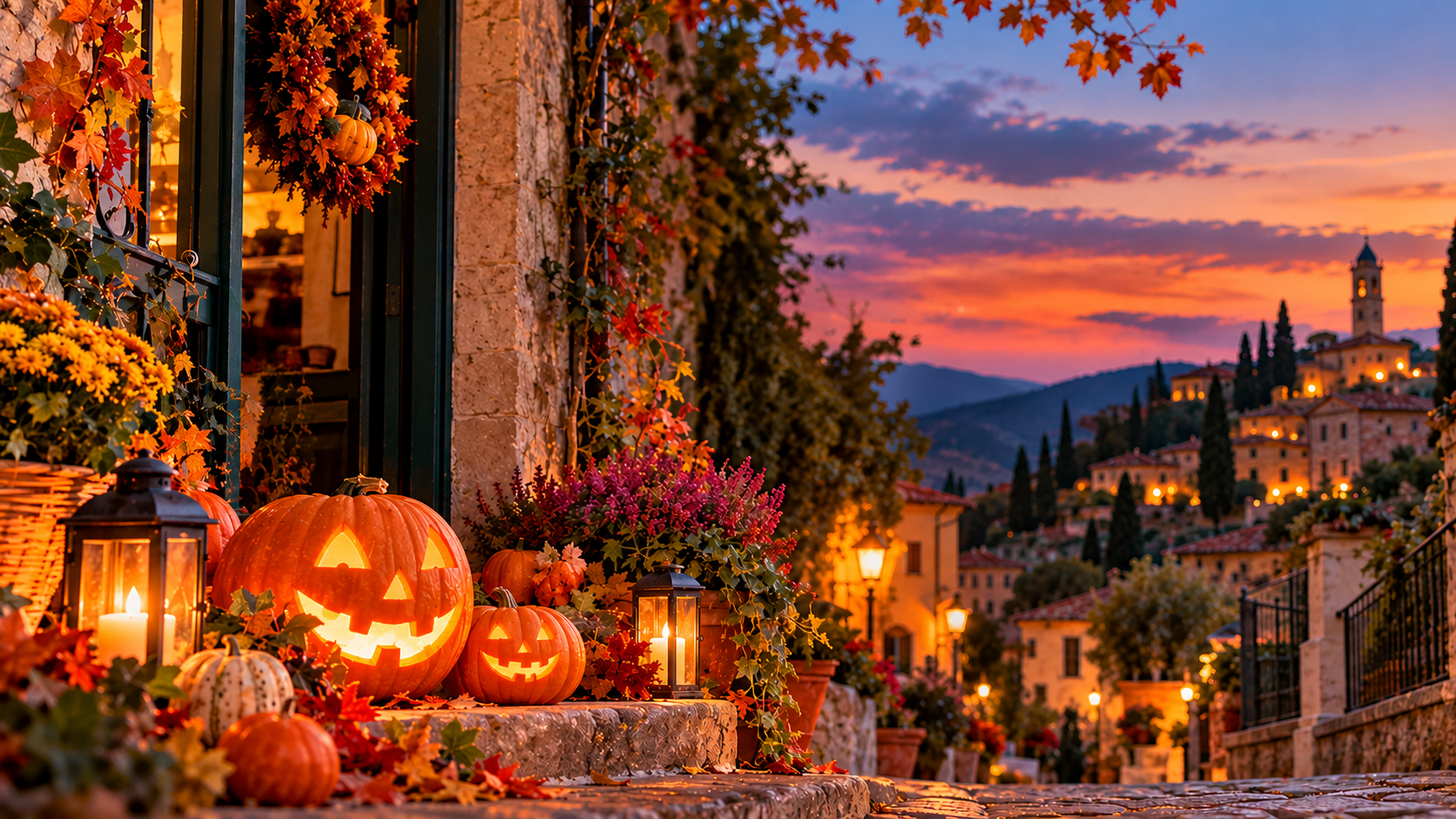
Halloween is becoming more and more popular in Italy, but how do Italians celebrate it? Discover Italian Halloween traditions, learn about important holidays like All Saints' Day and All Souls' Day, and explore fun Italian Halloween vocabulary, including “Dolcetto o scherzetto?”
Speaking Italian Too Fast? Say This.
Italians often speak quickly in everyday conversations. You almost understand… but not quite.
You don’t need perfect Italian. Sometimes one simple phrase is enough to keep the conversation going.
“Può ripetere, per favore?”
Can you repeat, please?
This useful travel phrase can help you feel more confident when speaking with native Italian speakers.
Learn simple, real-life Italian for travel and everyday situations.
CONTINUE LEARNING ITALIAN FOR MEDICAL SITUATIONS
Don’t Understand Italian? Say This.
You’re in Italy. Someone starts speaking… and you don’t understand.
Don’t panic. One simple phrase can help.
“Mi dispiace… non capisco.”
I’m sorry… I don’t understand.
This phrase is useful when speaking with locals, asking questions, shopping, traveling, or navigating everyday situations.
Learn practical Italian for real-life conversations and travel.
CONTINUE LEARNING ITALIAN FOR MEDICAL SITUATIONS
Talking About Family In Italian
Family is one of the most important parts of Italian culture, so learning how to talk about family in Italian is incredibly useful for real-life conversations.
In this lesson, you will learn essential Italian family vocabulary along with useful phrases Italians use naturally in everyday situations.
Some of the basic vocabulary includes:
la famiglia — the family
la madre — the mother
il padre — the father
il fratello — the brother
la sorella — the sister
il figlio — the son
la figlia — the daughter
il nonno — the grandfather
la nonna — the grandmother
lo zio — the uncle
la zia — the aunt
il cugino / la cugina — cousin
la moglie — wife
il marito — husband
You will also hear useful example phrases like:
“Ti presento la mia famiglia.”
I introduce you to my family.
“Questo è mio padre.”
This is my father.
“Questa è mia madre.”
This is my mother.
“Loro sono i miei genitori.”
They are my parents.
Learning family vocabulary is a great way to improve your Italian conversation skills and speak more naturally in Italy.
Whether you are traveling, meeting Italian friends, or simply learning the language for fun, these are words you will hear often in everyday life.
CONTINUE LEARNING ITALIAN FOR conversation
TAKE THE NEXT STEP
The Art Of Small Talk In Italian
Small talk is an important part of Italian culture. Whether you are sitting in a café, meeting new people, traveling through Italy, or having a casual conversation, knowing a few natural Italian phrases can help you feel more confident and connected.
In this lesson, you’ll learn useful Italian expressions for asking questions, starting conversations, and giving compliments in everyday situations.
Some of the phrases included in this lesson are:
Asking Questions
Di dove sei?
(Where are you from?)Ti piace vivere qui?
(Do you like living here?)Qual è il tuo hobby preferito?
(What’s your favorite hobby?)Cosa fai di bello?
(What do you do for a living?)Da quanto tempo vivi in questa città?
(How long have you been living in this city?)
Giving Compliments
Che bel vestito!
(What a beautiful dress!)Mi piace molto il tuo sorriso.
(I really like your smile.)Lei è molto gentile!
(You are very kind!)Stai benissimo con questo vestito.
(You look amazing in this dress.)
These are natural Italian phrases that can help you sound more relaxed, friendly, and conversational while speaking with native Italians.
Perfect for beginners, travelers, and anyone who wants to improve their real-world Italian conversation skills.
CONTINUE LEARNING ITALIAN FOR conversation
TAKE THE NEXT STEP
Essential Polite Italian Phrases
Politeness is an important part of everyday communication in Italy. Simple expressions like “thank you,” “you’re welcome,” and polite responses can make conversations feel warmer, more natural, and more respectful.
In this lesson, you’ll learn common polite Italian phrases that are useful in restaurants, shops, hotels, travel situations, and everyday conversations.
Some of the phrases included in this lesson are:
Common Polite Expressions
Grazie
(Thank you)Prego
(You’re welcome / Please / Go ahead)
Useful Examples
Grazie per l’aiuto!
(Thank you for the help!)Grazie per il cibo.
(Thank you for the food.)Grazie per il complimento!
(Thank you for the compliment!)Grazie per il regalo!
(Thank you for the gift!)Grazie per avermi aiutato.
(Thank you for helping me.)Prego, è stato un piacere.
(You’re welcome, it was a pleasure.)Grazie per avermi aspettato.
(Thank you for waiting for me.)Prego, non c’è problema.
(You’re welcome, no problem.)Prego, vai avanti.
(Please, go ahead.)Prego, si sieda.
(Please, have a seat.)
These are natural Italian phrases that native speakers use every day and are essential for sounding more polite and confident while speaking Italian.
Perfect for beginners, travelers, and anyone who wants to improve their real-world Italian conversation skills.
CONTINUE LEARNING ITALIAN FOR SOCIAL INTERACTIONS
THE ART OF SMALL TALK: ESSENTIAL ITALIAN PHRASES FOR SOCIALIZING
ROMANTIC ITALIAN LOVE PHRASES: HOW TO SPEAK FROM THE HEART IN ITALIAN
READY TO START SPEAKING?
How to Discuss Your Job In Italian
Talking about your job is one of the most common conversation topics in Italian. Whether you’re meeting new people, traveling, networking, or practicing everyday conversation, knowing how to describe professions in Italian is extremely useful.
In this lesson, you’ll learn common Italian job titles and useful phrases to help you speak naturally about work and careers.
Common Italian Question
Che lavoro fai?
(What is your job?)
Basic Italian Job Vocabulary
L’insegnante — Teacher
Il dottore — Doctor
L’avvocato — Lawyer
L’ingegnere — Engineer
Il cuoco — Chef / Cook
L’attore / L’attrice — Actor / Actress
Il cameriere / La cameriera — Waiter / Waitress
L’artista — Artist
Lo scrittore / La scrittrice — Writer
L’infermiere / L’infermiera — Nurse
Il poliziotto — Police Officer
Il pompiere — Firefighter
L’idraulico — Plumber
Il fotografo — Photographer
Il barista / La barista — Barista
Il traduttore / La traduttrice — Translator
Il professore / La professoressa — Professor
Il meccanico — Mechanic
Lo psicologo / La psicologa — Psychologist
Il pittore / La pittrice — Painter
This lesson is perfect for beginners who want to improve their Italian conversation skills and build useful real-world vocabulary for travel and everyday situations.
CONTINUE LEARNING ITALIAN FOR CONVERSATION
TAKE THE NEXT STEP
Common Italian Well Wishes And Greetings
Knowing how to give good wishes and congratulations in Italian helps conversations feel more natural, warm, and authentic. Italians often use these expressions in daily life, during celebrations, before trips, at weddings, graduations, and many other important moments.
In this lesson, you’ll learn common Italian well wishes and congratulatory expressions that are useful for travel, friendships, family events, and everyday conversation.
Common Italian Well Wishes
Buona fortuna!
(Good luck!)In bocca al lupo!
(Into the mouth of the wolf!)
A very common Italian expression used to wish someone luck.Crepi il lupo!
(May the wolf die!)
The traditional response to In bocca al lupo!Auguri per il tuo diploma!
(Best wishes for your diploma!)Buon viaggio!
(Have a good trip!)
Congratulations in Italian
Congratulazioni!
(Congratulations!)Congratulazioni per la laurea!
(Congratulations on your degree!)Congratulazioni per il nuovo lavoro!
(Congratulations on the new job!)Felice anniversario!
(Happy anniversary!)
These expressions are extremely useful in real-life Italian conversations and help you sound more friendly, polite, and culturally natural when speaking Italian.
CONTINUE LEARNING ITALIAN FOR SOCIAL INTERACTIONS
THE ART OF SMALL TALK: ESSENTIAL ITALIAN PHRASES FOR SOCIALIZING
ROMANTIC ITALIAN LOVE PHRASES: HOW TO SPEAK FROM THE HEART IN ITALIAN
READY TO START SPEAKING?
Speaking About Daily Routine In Italian
In this beginner-friendly Italian lesson, you’ll learn how to talk about your daily routine using practical and commonly used Italian vocabulary.
These expressions are perfect for everyday conversations, travel situations, language practice, and building confidence speaking Italian naturally.
Common Daily Routine Verbs in Italian
Svegliarsi — To wake up
Alzarsi — To get up
Lavarsi i denti — To brush teeth
Fare la doccia — To take a shower
Prepararsi — To get ready
Vestirsi — To get dressed
Fare colazione — To have breakfast
Andare al lavoro — To go to work
Lavorare — To work
Studiare — To study
Pranzare — To have lunch
Preparare la cena — To prepare dinner
Cenare — To have dinner
Guardare la TV — To watch TV
Riposarsi — To rest
Andare a letto — To go to bed
Addormentarsi — To fall asleep
Talking about your daily activities is one of the fastest ways to begin forming real conversations in Italian. These verbs are used constantly in everyday speech and help learners describe schedules, habits, and routines naturally.
This lesson is ideal for beginners learning conversational Italian and practical real-life vocabulary.
CONTINUE LEARNING ITALIAN FOR DAILY LIFE
Speaking About Holidays In Italian
Planning a trip to Italy? In this beginner-friendly Italian lesson, you’ll learn practical travel vocabulary and useful holiday-related expressions that can help you feel more confident while traveling.
This lesson introduces common Italian words connected to vacations, transportation, sightseeing, restaurants, museums, beaches, maps, and everyday travel situations.
Essential Italian Travel Vocabulary
La vacanza — Holiday / Vacation
Viaggiare — To travel
Il viaggio — Trip
La destinazione — Destination
La gita — Excursion
La spiaggia — Beach
Il mare — Sea
La montagna — Mountain
La città — City
Il paese — Country / Town
Useful Travel Words in Italian
Il bagaglio — Luggage
Il bagaglio a mano — Hand luggage
La valigia — Suitcase
Lo zaino — Backpack
La guida turistica — Tour guide
La mappa — Map
Il museo — Museum
Il monumento — Monument
Il parco — Park
La piazza — Square
Il ristorante — Restaurant
Il caffè — Café
Il souvenir — Souvenir
La cartolina — Postcard
Whether you’re preparing for a vacation in Italy or simply expanding your beginner Italian vocabulary, these practical words and phrases are extremely useful for real-life conversations and travel situations.
CONTINUE LEARNING ITALIAN FOR DAILY LIFE
Talking About The Weather In Italian
In this beginner-friendly Italian lesson, you’ll learn how to talk about your daily routine using practical and commonly used Italian vocabulary.
These expressions are perfect for everyday conversations, travel situations, language practice, and building confidence speaking Italian naturally.
Common Daily Routine Verbs in Italian
Svegliarsi — To wake up
Alzarsi — To get up
Lavarsi i denti — To brush teeth
Fare la doccia — To take a shower
Prepararsi — To get ready
Vestirsi — To get dressed
Fare colazione — To have breakfast
Andare al lavoro — To go to work
Lavorare — To work
Studiare — To study
Pranzare — To have lunch
Preparare la cena — To prepare dinner
Cenare — To have dinner
Guardare la TV — To watch TV
Riposarsi — To rest
Andare a letto — To go to bed
Addormentarsi — To fall asleep
Talking about your daily activities is one of the fastest ways to begin forming real conversations in Italian. These verbs are used constantly in everyday speech and help learners describe schedules, habits, and routines naturally.
This lesson is ideal for beginners learning conversational Italian and practical real-life vocabulary.
Mastering Basic Questions In Italian
Asking questions is one of the most important skills when learning Italian. In this beginner-friendly Italian lesson, you’ll learn the most common Italian question words and how to use them naturally in everyday conversations.
These essential Italian phrases are useful for travel, daily life, making conversation, and building confidence when speaking Italian.
Common Italian Question Words
Chi? — Who?
Chi è quella ragazza? — Who is that girl?
Che? / Che cosa? / Cosa? — What?
Che cosa vuoi mangiare? — What do you want to eat?
Dove? — Where?
Dove abiti? — Where do you live?
Quando? — When?
Quando arriva il treno? — When does the train arrive?
Perché? — Why?
Perché studi italiano? — Why are you studying Italian?
Come? — How?
Come stai? — How are you?
Quale? / Quali? — Which?
Quale libro preferisci? — Which book do you prefer?
Quanto? / Quanta? / Quanti? / Quante? — How much? / How many?
Quanti anni hai? — How old are you?
Question words are essential for real communication. They help you ask for directions, order food, meet new people, travel confidently, and keep conversations flowing naturally.
Mastering these simple Italian questions will dramatically improve your listening and speaking abilities as a beginner.
CONTINUE LEARNING ITALIAN FUNDAMENTALS
Mastering Telephone Conversation In Italian
Telephone conversations in another language can feel intimidating, especially for beginners. In this practical Italian lesson, you’ll learn essential Italian telephone phrases and polite expressions commonly used during phone calls, business inquiries, reservations, and everyday conversations.
These useful Italian expressions will help you sound more natural, professional, and confident when speaking on the phone in Italian.
Essential Italian Telephone Phrases
Buongiorno, sono … — Good morning, this is …
Pronto? — Hello?
Salve, potrei parlare con …? — Hello, may I speak with …?
Scusi, mi può dire chi parla? — Excuse me, could you tell me who is speaking?
Mi scusi, con chi sto parlando? — Excuse me, with whom am I speaking?
Making Inquiries and Requests in Italian
Potrebbe ripetere, per favore? — Could you repeat that, please?
Può parlare più lentamente? — Can you speak more slowly?
Potrebbe mandarmi un’email con ulteriori informazioni? — Could you send me an email with further information?
Mi può aiutare con …? — Can you help me with …?
Può confermarmi … — Can you confirm …?
Ho capito bene? — Did I understand correctly?
Learning how to speak on the phone in Italian is extremely useful for:
booking hotels and restaurants
making appointments
handling travel situations
contacting businesses
professional communication
building speaking confidence
Telephone conversations can be challenging because you cannot rely on facial expressions or gestures. Knowing these essential Italian phrases makes communication much easier and more comfortable.
CONTINUE LEARNING ITALIAN FOR TELEPHONE CONVERSATIONS
Opinions And Preferences In Italian
In this beginner-friendly Italian lesson, you’ll learn how to express opinions, preferences, likes, and dislikes naturally in Italian conversation. These are some of the most useful everyday phrases for speaking Italian confidently while traveling, meeting people, or improving conversational fluency.
This lesson focuses on practical Italian expressions you can use immediately in real-life situations.
Essential Italian Opinion Phrases
Penso che — I think that
Secondo me — According to me / In my opinion
Example Sentences
Penso che l’Italia sia un paese bellissimo.
— I think that Italy is a beautiful country.Secondo me, la cucina italiana è la migliore del mondo.
— In my opinion, Italian cuisine is the best in the world.
Expressing Likes and Dislikes in Italian
Mi piace — I like
Non mi piace — I don’t like
Adoro — I love
Odio — I hate
Useful Examples
Mi piace molto la musica italiana.
— I really like Italian music.Non mi piace il cibo piccante.
— I don’t like spicy food.Adoro il gelato italiano.
— I love Italian gelato.Odio la pioggia.
— I hate rain.
Learning how to express opinions in Italian helps you:
sound more natural in conversations
discuss food, travel, music, culture, and hobbies
build confidence speaking Italian
improve everyday conversational skills
communicate personal preferences clearly
These are essential Italian phrases for beginners and travelers who want to move beyond simple vocabulary and start speaking more naturally.
CONTINUE LEARNING ITALIAN FOR CONVERSATION
TAKE THE NEXT STEP
Talking About Hobbies And Interests In Italian
In this beginner-friendly Italian lesson, you’ll learn how to talk about your hobbies, interests, passions, and favorite activities in Italian. These are essential conversational phrases that help you connect naturally with native speakers and build confidence in everyday Italian conversations.
Whether you’re traveling to Italy, meeting Italian speakers, or improving your conversational skills, this lesson will help you express your interests more naturally.
Essential Italian Phrases for Talking About Interests
Mi piace… — I like…
Mi piace molto… — I really like…
Sono appassionato/a di… — I’m passionate about…
Adoro… — I love…
Mi appassiona… — I am passionate about…
Ho un grande interesse per… — I have a great interest in…
Asking About Hobbies and Interests
Quali sono i tuoi interessi?
— What are your interests?Qual è il tuo hobby preferito?
— What is your favorite hobby?Cosa ti piace fare nel tempo libero?
— What do you like to do in your free time?Hai qualche hobby che ti appassiona?
— Do you have any hobbies you’re passionate about?
Why Learn These Italian Conversation Phrases?
Learning how to discuss hobbies and interests in Italian helps you:
start natural conversations
make friends while traveling
improve speaking confidence
talk about music, sports, books, food, and activities
sound more conversational and less textbook-like
These practical Italian phrases are especially useful for beginners who want to move beyond memorizing vocabulary and begin speaking Italian in real situations.
Perfect for:
beginner Italian learners
travelers to Italy
conversational Italian practice
students improving fluency
everyday Italian communication