Restaurants

At A Restaurant In Italy? Say This.

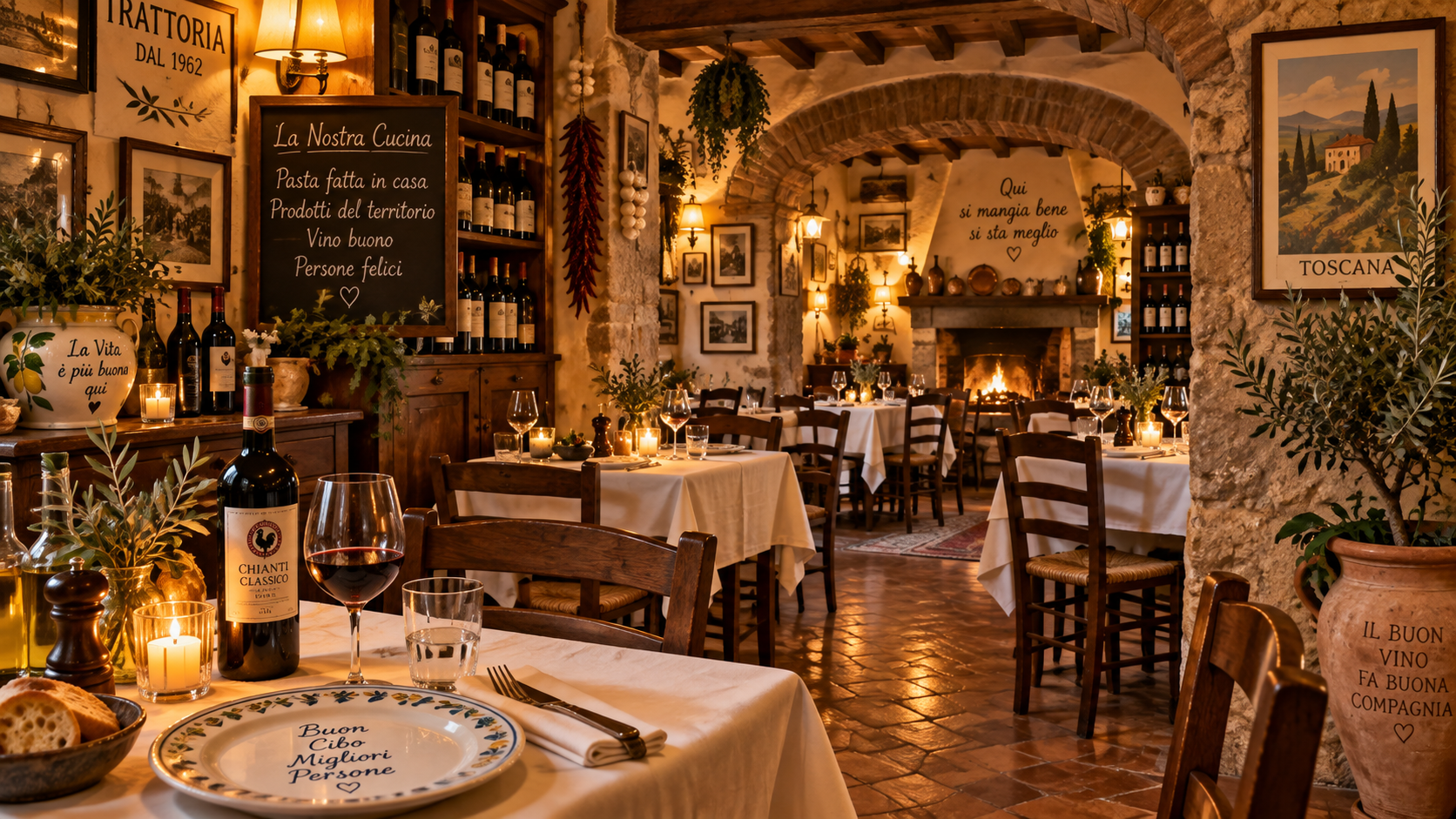
You are at a restaurant in Italy. The waiter arrives and asks for your order.

You know what you want… but suddenly your mind goes blank.

A simple phrase can solve the situation:

“Vorrei una pizza.”
“I would like a pizza.”

Vorrei is a polite way to ask for something and is commonly used in restaurants, cafés, and everyday situations in Italy.

Examples:

“Vorrei una pizza margherita.”
I would like a Margherita pizza.

“Vorrei un caffè.”
I would like a coffee.

Learn practical Italian phrases for real travel situations and order with confidence.


Restaurant Reservations in Italian

Want to reserve a table in Italy with confidence? In this practical beginner Italian lesson, you’ll learn essential Italian restaurant reservation phrases and useful vocabulary for booking a table, asking questions, and communicating naturally in restaurants across Italy.

This lesson is ideal for travelers, tourists, beginners learning Italian, and anyone preparing for real-world Italian conversations.

Essential Italian Reservation Vocabulary

  • La prenotazione — The reservation

  • Prenotare — To book / reserve

  • Vorrei prenotare… — I would like to reserve…

  • Vorrei fare una prenotazione a nome di…
    — I would like to make a reservation under the name of…

Useful Restaurant Reservation Phrases

  • Vorrei un tavolo all’aperto / nel settore non fumatori.
    — I would like a table outside / in the non-smoking section.

  • Vorrei un tavolo lontano dalla / vicino alla finestra.
    — I would like a table away from / near the window.

  • Per quante persone?
    — For how many people?

  • Per quando?
    — For when?

  • Per quale giorno?
    — For which day?

  • A che ora?
    — At what time?

  • A che nome?
    — Under what name?

  • È possibile pagare con carta di credito?
    — Is it possible to pay with a credit card?

Useful Time Expressions in Italian

  • Domani — Tomorrow

  • Dopodomani — The day after tomorrow

  • Oggi — Today

  • Questo fine settimana — This weekend

Knowing how to make reservations in Italian helps you:

  • book restaurant tables confidently

  • communicate naturally while traveling

  • improve your conversational Italian

  • feel more comfortable in real-life situations

  • understand common questions from restaurant staff

Whether you’re planning a vacation in Italy or simply improving your Italian speaking skills, these phrases are practical and essential for everyday travel conversations.


Ordering Food and Drinks in Italian

In this practical Italian language lesson, you’ll learn how to order food and drinks naturally in Italian restaurants, cafés, bars, and trattorias. These beginner-friendly phrases are essential for traveling in Italy and communicating confidently while dining out.

Whether you’re ordering pasta, coffee, wine, dessert, or simply asking for water, this lesson will help you sound more natural and comfortable in real Italian dining situations.

Essential Italian Restaurant Phrases

  • Vorrei… — I would like…

  • Mi piacerebbe… — I would love…

  • Prendo… — I’ll have…

Useful Examples for Ordering in Italian

  • Come antipasto, vorrei…
    — For the appetizer, I would like…

  • Come primo piatto, prendo…
    — For the first course, I’ll have…

  • Come secondo, vorrei…
    — For the second course, I would like…

  • Per dessert, mi piacerebbe…
    — For dessert, I would love…

  • Prendo una birra, per cortesia.
    — I’ll have a beer, please.

  • Mi piacerebbe un bicchiere di vino rosso.
    — I would love a glass of red wine.

  • Posso avere un po’ di acqua?
    — Can I have some water?

  • Prendo un caffè, per favore.
    — I’ll have a coffee, please.

Perfect for anyone wanting practical Italian phrases they can use immediately in real-life situations.


Italian Pronunciation

In this beginner-friendly Italian lesson, you’ll learn essential Italian pronunciation basics along with useful everyday phrases for introducing yourself, asking questions, and having simple conversations in Italian.

Italian pronunciation is known for being clear, musical, and consistent. Learning proper pronunciation early can greatly improve your confidence, listening skills, and speaking ability.

This lesson is perfect for beginners starting their Italian language journey.

Introducing Yourself in Italian

  • Mi chiamo [your name]. — My name is [your name].

  • Sono [your name]. — I am [your name].

Asking Someone’s Name

  • Come ti chiami? — What’s your name? (informal)

  • Come si chiama? — What’s your name? (formal)

Asking “How Are You?” in Italian

  • Come stai? — How are you? (informal)

  • Come sta? — How are you? (formal)

Common Responses

  • Sto bene. — I am well.

  • Sto bene, grazie. E tu? — I’m well, thank you. And you? (informal)

  • Sto bene, grazie. E Lei? — I’m well, thank you. And you? (formal)

Helpful Beginner Italian Phrases

  • Grazie — Thank you

  • Prego — You’re welcome

  • Per favore — Please

  • Scusa / Mi scusi — Excuse me

  • Mi dispiace — I’m sorry

  • A presto! — See you soon!

A great beginner lesson for travelers, students, and anyone who wants to start speaking Italian confidently.


Introduction

Welcome to this beginner-friendly Italian pronunciation lesson from Proficiency Consultant’s Italian Language Series. In this introduction, you’ll begin learning how Italian sounds are pronounced, how words naturally flow in conversation, and how to build confidence speaking Italian clearly and naturally.

Italian is often considered one of the most beautiful and musical languages in the world. The pronunciation system is also very consistent, making it an excellent language for beginners.

This lesson is designed to help you develop a strong foundation in:

  • Italian pronunciation

  • listening comprehension

  • speaking confidence

  • conversational flow

  • everyday communication

What You’ll Learn

In this lesson, you’ll begin to understand:

  • how Italian vowels are pronounced

  • common Italian sound patterns

  • pronunciation rhythm and stress

  • how Italian words flow together naturally

  • beginner-friendly conversational pronunciation

Why Italian Pronunciation Matters

Learning pronunciation early helps you:

  • sound more natural when speaking

  • understand native speakers more easily

  • improve your listening skills

  • communicate with greater confidence

  • build a stronger foundation for fluency

Italian pronunciation is highly phonetic, meaning words are usually pronounced exactly as they are written. This makes Italian one of the most approachable languages for beginners.

Perfect For

This lesson is ideal for:

  • complete beginners

  • travelers preparing for Italy

  • conversational Italian learners

  • students improving pronunciation

  • anyone starting their Italian language journey

A strong pronunciation foundation can dramatically improve your ability to speak and understand Italian in real-world situations.